
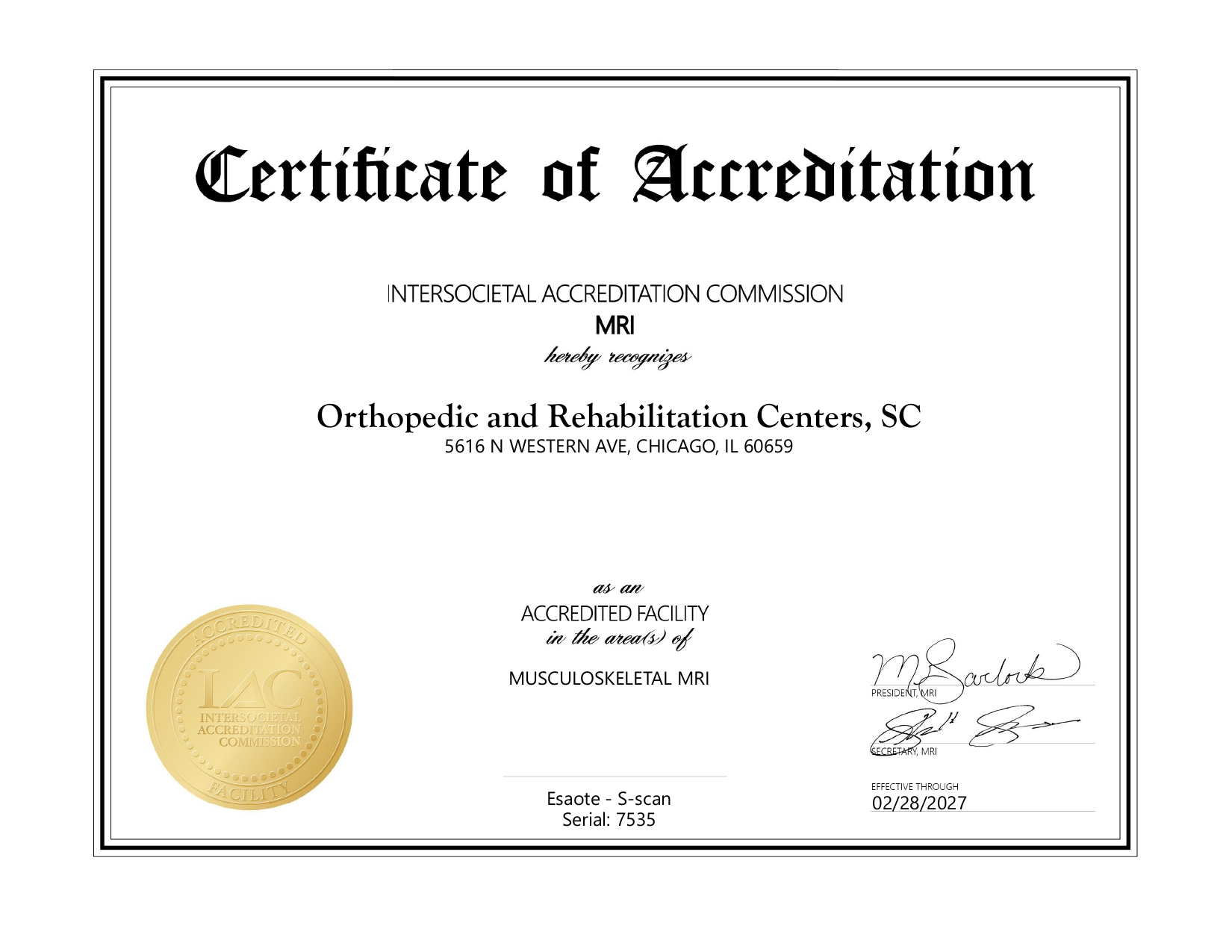
We are MRI Accredited by the Intersocietal Accreditation Commission
What is MRI?
Magnetic resonance imaging (MRI) is an advanced diagnostic imaging scan. It allows your providers to see your bones, cartilage, organs, and soft tissues without cutting you open. Through the MRI scans, they can detect injuries, damage, and growths of all kinds.
An MRI scan uses a large magnet and radiofrequency energy to produce detailed images on a computer. Unlike X-ray imaging, which can also make such diagnoses, MRI scans don’t use ionizing radiation.
The MRI machine is large and cylindrical. During the test, you lay still inside the machine as it creates a magnetic field around you while a scanner emits pulsed radiofrequency waves. The radiofrequency briefly pushes the nuclei from your atoms out of place, and the nuclei send radiofrequency signals back. A computer receives them and forms an image.
When do I need an MRI scan?
Magnetic resonance imaging scans can help your providers at Orthopaedic & Rehabilitation Centers diagnose and assess the severity of many of the most common orthopaedic injuries, both big and small. The results of an MRI scan also help them plan treatments and surgeries for specific injuries.
You might need an MRI scan to detect or rule out injuries like:
- Fractures
- Sprains
- Strains
- Tendinitis
- Cartilage damage
- Disc problems
- Joint dislocations
As soon as your MRI scans become available, your providers at Orthopaedic & Rehabilitation Centers interpret the results and let you know what they mean.
How should I prepare for an MRI scan?
Before you get an MRI scan at Orthopaedic & Rehabilitation Centers, your providers give you a set of instructions to follow leading up to the scans. Unlike other diagnostic tests, you can eat and drink as you normally would and continue taking all of your usual medications.
Because of the mechanisms of an MRI machine, certain objects can disrupt the process or even be dangerous to have in the room. You should be sure to remove:
- Jewelry
- Hair accessories
- Hearing aids
- Dentures
- Watches
- Wigs
- Underwire bras
- Makeup containing metal particles
During your MRI scan, you’ll be in an enclosed space for the test’s duration. If you’re prone to claustrophobia, your providers may offer a sedative medication before you enter the scanner.
To schedule a consultation and find out if you need a diagnostic MRI, call Orthopaedic & Rehabilitation Centers or book an appointment online today.